Showing posts with label writing. Show all posts

Tuesday, 4 December 2012

Really, this was just an excuse for a toy...

It's not really a secret that I am not a character-driven writer. When I sit down to write, the story, ideas, and setting come to me before the characters do. Steph is the opposite. When she sits down, it's the characters that come to her first and foremost, and she figures out the story afterwards.

Now, I don't think it matters which way around you come up with stuff. Characters, story, setting, idea, whatever. What does matter is that you figure out all the aspects sooner rather than later.

In some previous books, I haven't really figured out the characters early enough, and that's meant an awful lot of difficult rewriting later on.

So, for the last novel I decided to turn things upside down and figure out the characters right from the beginning.

After the necessary brainstorming and the exploratory writing that I always do (normally 10 - 15k of 'opening', to figure out the style, who needs to be involved, and to know the world, and, well, just because I can), I bought a giant whiteboard, wasted a good day attaching it to the wall (no DIY is not my strength...), and then started figuring everything out, starting with the characters.

Characters

First up, I drew a grid with the characters across the top and the following five questions down the side that I had to answer for every single character who has any kind of role in the book:

1. What do they want and what do they desperately need? (Generally, these things should be in opposition; where they are massively in opposition, I write INTERNAL CONFLICT, to remind myself how important it is to their story. I should probably write it for every character.)

2. What are they doing to get it?

3. What is stopping them from getting it?

4. What do they stand to lose if they don't get it?

5. Where do they end up?

It doesn't take long before the conflicts between the characters start to emerge. In my old way of writing, these conflicts didn't always become apparent until I'd written a lot of the book, causing lots of rewriting and frustration.

After I'd come up with these character sheets, which basically show the arc of each character over the entire book, and added any specific background or character traits the individual characters needed, I started to break it down.

The Acts

I tend to write three-act books, but obviously they don't have to be. After the character sheets I drew another grid, this time with 'Opening', 'End of Act 1', 'End of Act 2', and 'End of Act 3' across the top, and each character name down the side, along with a general 'What is happening?' section.

This basically allowed me to outline the overall plot AND the arcs of each character over each of the three acts.

After that (...) I went back in and broke it down further into 'sequences'. These are groups of scenes or chapters. I figure about 4 - 7 scenes make a sequence (although that just happens to meet my style; none of this is rules). For every sequence, for each of the major characters (who appeared in that sequence) I wrote down the starting and ending point, and the change that had occurred for them.

Later in the process I did a similar thing for each individual scene.

Now, some of you are probably thinking I'm crazy at this point. I know a lot of people just write from beginning to end without any of this, and I used to, but this is what worked for me.

The point is not that you have to outline, or that the outline you come up with this way is in any way set in stone, or that the characters have to stay the way you originally conceive them.

But if you find that your stories tend to be driven rather too much by events and the characters just chase the events around, then this can be a pretty useful technique.

I know I'm not going to have any trouble coming up with the plot, the ideas, or the setting for a story. But using this technique, I've made myself know how the characters would interact before I've even set them off running, and I discovered some pretty neat subplots I would otherwise have had to lever in at a later point.

So, does anyone else do anything like this? And do you have a giant whiteboard to do it on? And do you only do it this way because once you'd bought a giant whiteboard, you have to do something with it...?

Monday, 26 November 2012

Wonderful, exciting news!

Okay, I've held off on this for most of a week, but that's the extent of my self-discipline, so here goes:

My middle grade novel Secrets of the Dragon Tomb is going to be published by Christy Ottaviano Books (an imprint of Henry Holt / Macmillan) in the US and Canada!!!

My wonderful-fantastic agent, Jenn Laughran, gave me the news last week, and the announcement was in Publishers Marketplace over the weekend.

A few of you might remember Secrets of the Dragon Tomb from when I was writing it a few years ago. It's steampunk! It's a thrilling adventure! It's set in the Regency. On Mars. It's full of despicable villains, deadly clockwork machines, unlikely spies, and terrible peril. And it has pterodactyls. Of course.

If I can be slightly immodest, I absolutely love this world. I don't think I've ever had so much fun coming up with ideas and writing the characters as I did for this, and I'm so excited that I'll get to share it with other people.

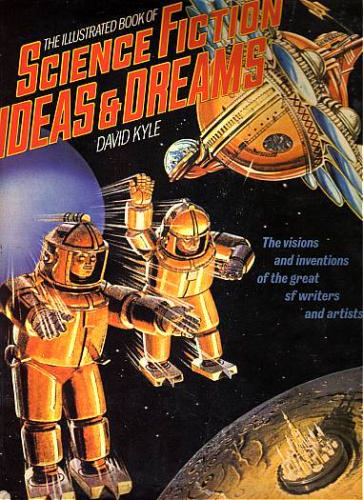
I can trace this book all the way back to when I was about 16 years old. (I am now *ahem* 41 years old, so, you know, that's an awful long time...) My parents gave me a fantastic book, called The Illustrated Book of Science Fiction Ideas and Dreams, by David Kyle.


It's a wonderful book. I still own this book (I actually now have two copies), and am known to wave it around frequently, most recently at a steampunk panel at Bristolcon. (I was on the panel, not waving it from the audience. I'm not that crazy...)

The book gives a history of science fiction writing and art from its earliest origins right through to the mid-70s. The bits that really wowed me most of all were the stuff on early pulp, and the stuff on Victorian science fiction, particularly the work of the French artist, Albert Robida, whose fantastic flying machines and elaborate futuristic ideas were an enormous influence on me.


(You can see a bunch more of his work here, or, you know, on the internet...)

Add a touch of Jane Austen, some Indiana Jones, and some sub-Wodehouse humour, and, well, you're probably going to just end up confused. (Yes, I will have to come up with a better elevator pitch than this...)

Right now, I know absolutely no other details about the publication. I don't know when the book will come out. I don't even know if it'll keep the same title. I do know that it's going to have internal illustrations (*faints with excitement*; I love books with illustrations), and that it's part of a two-book deal, but I don't yet know what the second book will be.

But right now, who cares!?! Right???

YAY! *Lies down again in excitement* (This is the lazy person's version of excitement; you may jump up and down in excitement. I lie down. With chocolate. And green tea.)

Friday, 19 October 2012

Friday Links

Science

I'm not sure whether a fluffy T. rex would be more or less scary than a scaly one, but this is a fascinating article.

The planned badger cull in England has zero scientific basis and is entirely designed to placate one of the Conservative's vested interest groups.

This is how vampires began.

Writing and publishing

John Scalzi on Amazon's new ranking of authors by sales.

The Seven Stages of Publishing Grief (or Hello Darkness, My Old Friend)
Robin LaFevers spins off from the new Amazon rankings to talk about 'the soul sucking land of Major Disappointment' of publishing. Brilliant, and well worth reading for any writer.

Guest Post: Dear Agent -- Write the Letter That Sells Your Book
A guest post by Nicola Morgan over on Writer Beware about how to create a great query letter for your novel.

The 11 Ingredients of a Sizzling Book Description
In a similar vein, from a couple of weeks back, Mark Edwards has a guest post on Catherine, Caffeinated on writing a book description.

Best Practices For Amazon Ebook Sales
While we're on the topic, have this one as well. I don't agree 100% with it, but it's all worth thinking about when you're putting your book description together.

A helping of just too cute...

ATE team rescue another baby elephant from a well
Video of the Amboseli Team for Elephants rescuing a baby elephant that had fallen into a well. A mixture of 'Was that really the best way you could think to rescue it?', cheering the triumph, and a complete tear-jerker of an ending. Watch it.

Monday, 8 October 2012

Passion

Today, I am going to talk to you about passion. The passion that dare not speak its name. Hot, steamy—

No, wait, wrong blog entry. This one's much more wholesome.

Last night, Steph and I watched the J.K Rowling - A Year in the Life documentary that aired a few years ago. (You can see the whole thing on YouTube.)

Now, watching this kind of thing with me is not — how shall we put it — the easiest experience in the world, but luckily my wife is tolerant and also used to it. Every couple of minutes, I had to pause the show and start ranting. This is the kind of thing I do.

Don't get me wrong. Rowling is articulate, intelligent and inspiring. Which could not be said of the narrator / interviewer in the documentary, who kept making the most trite observations in a tone that implied he thought he was saying something profound.

To the point!

The thing that most leapt out to me in the documentary was just how much Rowling cared about the characters in Harry Potter. Not just the heroes or the major characters, but all of them. She knew them. She knew about their lives and their passions and their fears and she cared. She felt with them.

Not only that, the story meant something to her. It was important and she cared about it. It was imbued and brought to life by things she really believed in. She wrote it with the passion flowing through her. You don't have to like Harry Potter or Rowling's writing to appreciate how important that is in writing.

Okay, this isn't an original observation. I expect some of you, if you got this far, are rolling your eyes at virtual me and going, yeah, whatever, I knew that when I was, like, 12. (In my head, you always say 'like' when you're rolling your eyes.)

Well, the truth is, so did I. Well, maybe not when I was 12. When I was 12, I was more interested in explosions and dinosaurs and lots and lots of blood. (Coming to think of it, not much has changed there…)

But it's easy to forget these things. For the last week or two, I've been feeling that my WIP has been going a bit flat. It had become very mechanistic. 

I've got an outline for this story, for the first time ever in something I've written, and for the most part, this has been fantastic for the story and my ability to write it when I'm tired and busy, but the last couple of weeks, I've fallen into just thinking, This has to happen next, and then this, and I have to get characters X, Y, and Z to A, B, and C by this scene. I'd forgotten that the story is about the characters. It's about what matters to them, and their emotions and reactions and actions, and the outline is there to help that only.

So, today, I went back and started to try to put myself in that mode that Rowling was so obviously in with her characters, making myself think about what matters to them and feeling what they think.

And I think it worked. The mechanistic turning of the wheel has gone, and the life is coming back.

Obviously, I'll forgotten this again in a couple of months, and you can roll your eyes at me again when I remember. Just try not to say 'like' when you do. It makes you sound like a teenager.

Thursday, 3 May 2012

And today...

Back, oh, all the way in 2001, I was living near Bristol in the U.K., and I was training to be a science teacher. I'd just quit a job as a publisher/editor of scientific journals, and I'd taught abroad before, so I figured I'd give it a go.

The truth is, I would have been a terrible teacher. I'm a bit of a control freak, and really, that's not exactly a great qualification for dealing with a room of 30 bored teenagers. Oh yeah. Believe me.

Anyway, I was bored and I was flailing around for something more meaningful in my life. And, completely by accident, I found it. I'd finally got back to writing after many years (the benefits of a profoundly tedious job...), and I was spending a fairly high proportion of my 'work' day on Critters, the online writing workshop, critiquing other people's work and having mine torn to bits in return.

Sometime in that period, I heard of Clarion West, the actual, real, live, in-person, face-to-face, six-week, bootcamp of a writer's workshop which was held in Seattle each year. I didn't have much expectation of success, but I fired off an application anyway, and pretty much forgot about it.

Then, suddenly, out of the blue, I got a phone call from one of the administrators of the workshop saying that I'd been accepted. Wow. I don't think I came off very well in that phone call. When I'm surprised or shocked I tend to revert to a very neutral, calm, unemotional facade. Here I was, getting incredible, exciting news, and I reacted like I was being told I was due a eye appointment. Man, I'm so cool...

I'd wanted to be a writer since I was 14 years old. At 14, I'd been absolutely sure I would sell and publish a novel by the time I was 18 (ha!). Every day after school I scribbled away in pencil in my notebook, blatantly ripping off Terry Pratchett and thinking how awesome I was. Then I went to university, and other things took over, but I never stopped wanting to be a writer. Now, here was my chance.

But there was one problem. The workshop began two weeks before the end of the teacher training course I was doing, and there was absolutely no way they were going to let me leave early. (I still have issues with this: I had finished and passed all the assignments and the teaching practice, and the last two weeks had no formal classes; I'm sure we could have figured something out to make up the attendance requirements. Still.)

I decided to go to Clarion West anyway, and screw the teaching qualification. So I did.

It really was the best decision I ever made. Not only did I meet my future wife, Stephanie Burgis, there, but I learned more about being a writer than I did in all the years before or since. And two of the stories I wrote in those six weeks were subsequently published. I loved it there. I loved the writing and critiquing late into the night. I loved hanging out in people's rooms chatting and laughing and throwing ideas back and forth. I loved wandering Seattle.

I even loved the class's trip to see AI, possibly the worst SF movie I've ever seen.

Most of all, I loved my classmates and our instructors. In our very first week, we were taught by the great Octavia Butler (and she even liked my story!) Yeah, we had our tensions and our bust-ups. We ripped into each other's stories, and gritted our teeth when others ripped into ours. But despite it, we stayed friends. We went through that fire together.

Almost eleven years later, most of us are still in touch.

And today, we are launching an anthology of stories from eleven of the participants in Clarion West 2001. Best of all, right now it's free to download from Amazon!

Here's the table of contents:

Under the Needle's Eye

The Worry Doctor by Linda DeMeulemeester
Angelfall (novel excerpt from Book 1) by Susan Ee
Selling Short by Raymund Eich
Everyone Gets Scared Sometimes by Ari Goelman
Ruined Spa Day by Samantha Ling
Coyote Discovers Mars by Emily Mah
The Guy Who Worked for Money by Benjamin Rosenbaum
Everybody Stops at Boston's by Allan Rousselle
Rosamojo by Kiini Ibura Salaam
Lavender's Blue, Lavender's Green by Patrick Samphire
The Fire in Your Sky by Ibi Zoboi

The anthology was organized by the enormously energetic Emily Mah with Raymund Eich (equally energetic, no doubt, but in a much more manly way). My story is a reprint of a story that I published in Realms of Fantasy in 2005.

Download Under the Needle's Eye from Amazon.com | Download Under the Needle's Eye from Amazon.co.uk

Under the Needle's Eye is free for just two days, so go get it! Even though it's from Amazon, you don't actually need a Kindle to read it; there are free Kindle apps for computers, tablets, etc.

Here's the book trailer, again made by the I-don't-know-where-she-gets-the-energy-from Emily Mah (who also publishes as E M Tippetts; check out her books). It's pretty awesome.


The anthology cover is a joint effort by Raymund Eich and Emily Mah. 


Go get it while it's free!

Thursday, 1 March 2012

Children's books

I am, unfortunately, one of those people who reads the comment sections on newspaper websites. I know I shouldn't. I know they contain the biggest selection of trolls, bigots, crazies and snobs gathered in any one place outside of YouTube.

But I can't help myself. There they are, those comments, right a the end of the articles, and I find myself scrolling onto them again and again and being horrified and outraged (something, no doubt, the newspapers rely on to improve their advertising revenue from page impressions and time-on-page).

This week, with the news that JK Rowling was going to publish an adult novel, the snobs in particular were out in force.

There's one particular meme amongst the snobs that keeps recurring. It goes something along the lines of 'Rowling is attempting to write a "proper" book. She might have gotten away with bad writing for children, but she won't manage for adults.'

Leaving aside the ridiculous suggestion that Rowling is a bad writer (she isn't; the fact that she violates certain pre-conceived writing rules merely shows that the 'rules' are too limited), I am going to offer this defence that C.S. Lewis made in response to criticism of The Hobbit:
It must be understood that this is a children's book only in the sense that the first of many readings can be undertaken in the nursery. Alice is read gravely by children and with laughter by grown-ups; The Hobbit, on the other hand, will be funniest to its youngest readers, and only years later, at its tenth or twelfth reading, will they begin to realise what deft scholarship and profound reflection have gone to make everything in it so ripe, so friendly, and in its own way so true.
As the parent of a three-year-old, I recognise this in so many children's books. They are for children, of course, but not just for children. Adults can find something quite brilliant in them too. It's not true of all children's books, of course, but it is of many of them, and many of the best. Rowling is a writer like that, just like Tolkien was.

And those who refuse to read and appreciate them because they are 'children's books' are being no more than snobs.

Thursday, 16 February 2012

Recommendations?

A few weeks ago, I blogged about learning lessons from screenwriting for writing fiction. Then, a couple of days ago, someone pointed me to J.K. Rowling’s wonderful (if enigmatic) handwritten plot spreadsheets for The Order of the Phoenix.

I’ve been thinking for a while that I should start outlining my stories more. Maybe not short stories, but novels, certainly.

I’ve always told myself that I don’t work well with outlining, that my best stuff comes when I writing blind and in the moment. And to a degree that’s true. But I’m also more prone to hitting brick walls or having to backtrack, or just sitting there wondering where the hell the story should go next.

I think part of my reluctance is because I can get caught up in being a little too mechanistic, sometimes, in forcing my story in directions it shouldn’t go in order to fit a preconceived idea, and then having to do a lot of work to unpick it. I worry that outlining will make that worse.

But I don’t think it has to. Not if the outline has room for shift. And maybe if I do outline properly, I’ll solve those issues before I even come to them.

So, I’m going to try it, but I need your help! Or your recommendations at least. If you outline, do you have a particular method? What kind of things do you include or leave out? Can you recommend any particular books on outlining (screenwriting or novel writing, I don’t mind)?

I’d really appreciate any suggestions. Otherwise my whiteboard will remain empty for a very long time. ;)

Wednesday, 25 January 2012

Writing and screenwriting

I started to write a blog entry the other day, saying some critical things about a couple of TV shows. In particular, I was criticizing how the shows didn't seem to be able to make up their minds about what kind of shows they were. They would go in one direction for a while (dark, adult, for example) then suddenly switch course (comedy, for example). I was saying the writers didn't have enough belief in their shows.

But you know what? That's not this blog entry. I trashed that one. I trashed it because of a DVD extra that I watched from Angel, season 3. The extra is called 'From Page to Screen', and it covered pretty much what you would expect: the whole process of coming up with an episode of a show from conception to finished product.

The writers on the show have (if they are lucky) a week to write a 42 minute episode of a show. A week. Sometimes less. And this is the way they have to go about it:

  1. Someone pitches an idea and it gets structured it, point by point, in a writers' meeting
  2. One of the writers takes that away and writes an outline
  3. They return the outline and are given notes on it
  4. Take the notes away and write the script
  5. Get notes on the script and rewrite it
A week to write it. Sometimes for or five days. For 22 episodes in a year.

I realized that I, as a short story and novel writer, am in absolutely no position to criticize a few inconsistencies in a show when that's the process they have to go through so quickly just to get a script.

And I can't help but think that many of us who do write short stories and novels can be just a little bit too precious about our writing. 

I have writing sessions where I come away only having written 50 words. Sometimes nothing at all. If I was a screenwriter, that just simply wouldn't be an option. People would be waiting for the script, and they would have deadlines too. Short ones. 

If I was a screenwriter, I wouldn't be able to complain that I wasn't inspired or that I had no decent ideas that day or that I or that I was too tired or that I couldn't work from an outline. I wouldn't be able to wait two months between drafts to clear my head. I'd just have to do it. Right then. No matter what.

I wouldn't have the luxury of whining about an editor wanting to change that one little line that I loved. Everything I wrote would be torn up, mercilessly, if necessary, to make the episode work.

Now, I'm not saying that what is produced by a screenwriter working like this is necessarily better than that which a novelist working for a year or five years on a single book produces. (Nor vice versa, for that matter.) I'm not even saying that the forms are the same (fiction writing is a much more solo activity; screenwriting is more collaborative).

But I do think there's a lot we can learn from this type of process. About stripping away the chance for excuses. About not being overly precious and resistant to suggestions for changes. About planning and outlining and redrafting. About being accountable and about other people relying on you deliver something of quality on time, no matter what. About buckling down even if you're exhausted or uninspired or stressed. And that's what this blog entry always should have been about.

Wednesday, 11 January 2012

Being a writer

You’ve all been in this situation before. You meet someone for the first time, in a casual acquaintance type of way. It might be at a party or it might be meeting another parent when you’re picking your kid up from school. Whatever. And they ask you what you do.

Here’s the thing. When people ask me, I never say I’m a writer. Not ever. I say I’m a web designer.

And I am a web designer, of course. I love that part of my life. Building websites is great. It’s fun, it’s challenging, it’s stimulating, it’s satisfying, and I’m good at it. But it’s not the thing I’m most passionate about. It’s not the thing I dreamed about from, oh, the beginning of high school. (The web didn’t exist back then...) What I always dreamed about was being a writer.

But the truth is, I’m embarrassed to say I’m a writer. I figure that if I do, people are going to ask what books I’ve got out, and I haven’t published any books. I’ve only published short stories. Most people never read short stories. I think that if I call myself a writer, people will think I’m deluding myself. They’ll think I’m full of it.

When someone does get out of me that I’m a writer (usually because my wife tells them), I say I “just” write short stories (or “only short stories”, like I realized I did in the paragraph above), as though somehow they’re not worth mentioning.

But the truth is, I’m damned proud of those short stories. I worked long and hard at them. Editors were willing to pay money for them and print them in their magazines and anthologies. Some of these are really good stories.

If I add up the money I’ve been paid for my short stories, it comes to at least the same amount as the average advance for a first novel, probably more. My stories have reached far more people than most first novels ever do.

And here’s another thing. By not saying that I’m a writer, I’m deprioritizing my own writing. I’m telling myself every time that the writing is not the most important part of my career. I’m telling myself that the time I have for work should always be for web design, and that if I spend some of it writing, I’m doing the wrong thing. That writing time is wasted time.

So, I’ve decided to make a new New(ish) Year’s resolution: I’m going to start saying I’m a writer when people ask what I do. I’m going to say I’m a web designer too, but that’s not all I’m going to say, because it’s not all I do.

And maybe, just maybe, that’ll make me give the writing the priority it deserves.

Wednesday, 4 January 2012

Complicating things

For the last couple of weeks, I've been working (on and off) on a couple of short stories, one of which was a kind of YA fantasy (with relatively little fantasy content) and the other of which was (I thought) an adult fantasy with much more fantasy content.

They were pretty different stories, and the only thing they really had in common was that I didn't quite know where either of them were going, and I was kind of stumped.

Well, I'm not someone who likes to make life easy for myself (well, I actually like it; I just rarely do it). So, I stuck the two stories together, almost unchanged, just alternating the points of view.

And the funny thing is, I do actually know where the combined story is going now. It's going to be tough to fit everything together and make it come out well, but it at least it has a purpose and direction.

Back when I was at Clarion West in 2001, I remember Nalo Hopkinson saying that every scene needed two things going on. It's the same for every story. There have to be (at least) two things going on that can play off against each other, inform each other, head off and rejoin each other, twist around and complicate. 

Neither of the stories had that before. Now they both do. How they'll finally work out, I can't say. But at least they have a chance now.

Wednesday, 28 December 2011

On Writing

Back in … oh, quite a long time ago now; let's say about 2002 … I read Stephen King's fantastic On Writing. If you haven't read it, you certainly should.

One particular piece of advice stuck with me, but for completely the wrong reason. In fact, I'm kind of embarrassed to say it here, because just about everyone will probably look at me and say, "Duh. We could have told you that."

Anyway, the piece of advice was that you should cut 10% of a book's word count during revision. I read that, and I thought, Are you crazy? I can't do that. When I revise, I thought, my books get longer, not shorter. There's absolutely no way I could cut 10% on revision.

Obviously (I thought; feel free to laugh at me here), Stephen King's first drafts are very different from mine. He writes too much; I write too little. And, like all smugly ignorant wannabes, I left it at that.

Fast forward to this year, and I get feedback from an editor on my novel. She loved lots about it, she said, but it was too long. Could I cut it by 30% and send it back.

30%! The mind, briefly, boggled.

But, actually, for some reason, 30% seemed more doable than 10%. 30% says be ruthless. Be cruel. I set about rearranging scenes, removing certain unimportant side plots, figuring out different ways that other things could happen.

At the end of this attempt, I'd cut about 20% of the book. After that, I wasn't giving up. I gritted my teeth, remembered Stephen King's advice, and went through, word-by-word, line-by-line, paragraph-by-paragraph and deleted everything that didn't absolutely need to be there.

Now, I'm going to add a word about what 'absolutely need to be there' means. Because it's tempting when in mega-cutting mode to think that everything that either doesn't advance the plot or produce character development isn't absolutely necessary, but that isn't true. Books need colour as well as purely mechanistic progress, and those little bits of description, quirky dialogue, and incidental events are what make a book. That's not what I was cutting.

By the time I'd finished getting rid of all the really unnecessary stuff I had cut another 10% of the book, and I had realised something important: I use too many words in my writing. I repeat things that I don't need to repeat. I go on too long.

(And, incidentally, it made me realise another thing: if a scene or paragraph isn't working and I can't get it to work, it almost always needs to be cut; the book works better without it.)

I made a resolution at the end of that process: no matter how good I feel a book is, no matter how tight and how polished, my workflow will now always include a stage where I go through and cut 10% of the book before I let it go out the door, because no matter how much I think it doesn't need it, it does.

A final addendum: this book had been revised multiple times and read by several professional writers before it reached this particular editor's desk, and none of us had picked up on the bloat. We all thought it worked. And this is why books need editors, even (particularly!) self-published books. No matter how much work you put into it and no matter how many friends or other writers read and critique it, it needs professional editing to pick up the things the rest of you aren't seeing.